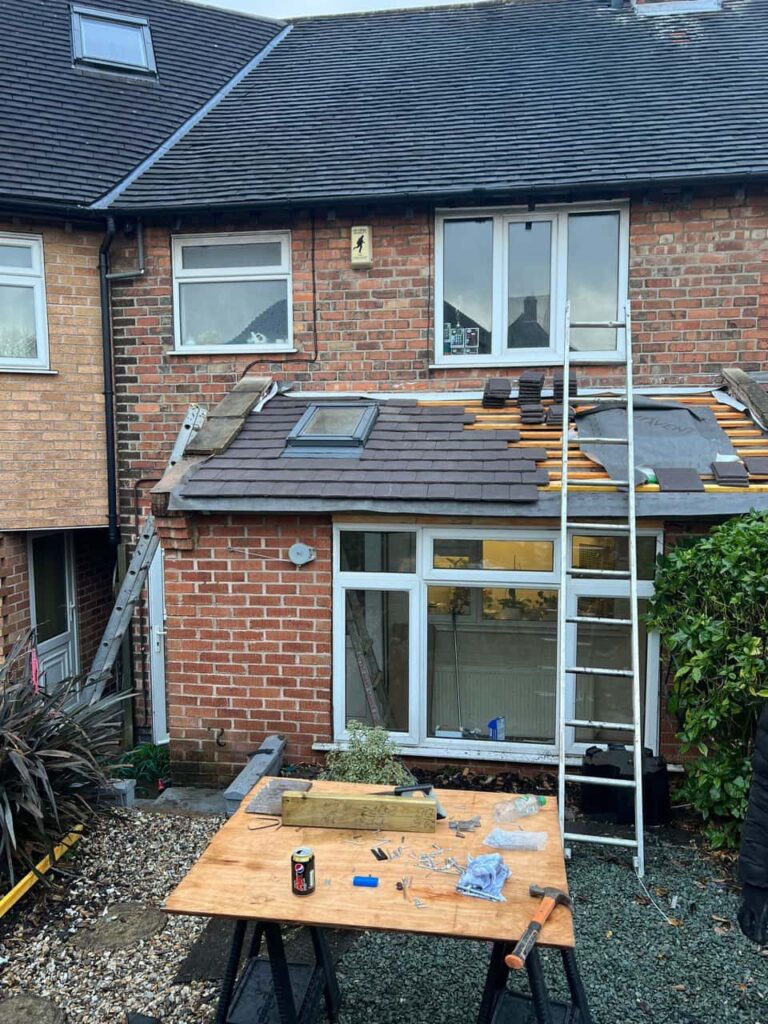
A leaking roof is not always caused by an obvious hole or a missing tile. Water can enter through a small weakness, travel beneath the roof covering and appear inside the property some distance from the original defect. This can make the source difficult to identify without a thorough inspection.
Understanding the most common causes of roof leaks helps homeowners recognise when professional attention is needed. Prompt investigation is important because continued water ingress can affect insulation, roof timbers, ceilings and interior finishes.
Why Roof Leaks Develop
A roof is made up of several interconnected components, including tiles or slates, underlay, battens, flashing, ridges, valleys and drainage details. A weakness in any one of these areas may allow water to penetrate the roofing system.
Some leaks develop suddenly following damage, while others result from gradual deterioration. The visible damp patch is therefore a symptom rather than a reliable indication of the precise fault.
Slipped, Cracked or Missing Tiles
Damaged and displaced tiles are among the most recognisable causes of roof leaks. A tile does not need to be completely missing to create a problem. Even slight movement can disturb the overlapping arrangement that directs rainwater down the roof.
Tiles may become loose because of:
- Deteriorated fixings
- Movement in the supporting battens
- Repeated exposure to wind
- Frost-related damage
- Previous disturbance during other work
- General ageing of the roof covering
A cracked tile may also allow water to reach the underlay, particularly during prolonged or wind-driven rain.
Damaged Lead Flashing
Lead flashing forms weather-resistant junctions around chimneys, roof abutments, valleys and other changes in the roof structure. It is particularly important because these intersections are naturally more vulnerable to water ingress.
Over time, leadwork can lift, split, become displaced or pull away from adjoining masonry. Mortar securing the flashing may also deteriorate. Once a gap develops, water can enter behind the lead and spread beneath the surrounding roof covering.
Worn or Failed Roof Underlay
The underlay beneath tiles or slates provides a secondary layer of protection. Although it is not intended to replace the external covering, it helps direct incidental moisture towards the eaves.
Older underlay can become brittle, torn or degraded. If water passes through a defect in the roof covering, damaged underlay may no longer prevent it from reaching the loft space. Problems frequently occur near the eaves, around penetrations or where the material has deteriorated around fixings.
Defective Roof Valleys
Roof valleys carry substantial amounts of rainwater from adjoining slopes. Leaves, moss and other debris can restrict the flow of water, causing it to collect or move beneath nearby tiles.
The valley lining itself may also crack, corrode or separate from surrounding materials. Because valleys handle concentrated water flow, relatively small defects can lead to noticeable leaks during heavy rainfall.
Chimney Deterioration
Chimneys contain several potential entry points for water. Deteriorated pointing, cracked masonry, damaged flaunching and defective flashing can all contribute to a roof leak.
Water entering around a chimney may travel along rafters or underlay before becoming visible indoors. Consequently, a damp patch near a chimney does not automatically confirm which part has failed. The entire junction should be examined carefully.
Problems Around Roof Penetrations
Vents, pipes, rooflights and aerial fixings interrupt the otherwise continuous roof surface. Each penetration requires suitable seals, flashing or weatherproof detailing.
As these materials deteriorate, small gaps may develop around their edges. Poorly sealed or ageing roof penetrations are easily overlooked from ground level but can permit repeated water ingress whenever rain reaches that section of the roof.
Ridge and Hip Defects
Ridge and hip tiles protect the highest and external angled sections of a roof. Traditional mortar bedding can crack or loosen over time, allowing the tiles to move and creating gaps where water can enter.
A loose ridge or hip tile can also affect nearby materials. Repairing the affected section promptly helps prevent further movement and restores the weather resistance of the junction.
Flat Roof Cracks, Splits and Weak Joints
Flat roofs depend on a continuous waterproof covering and effective drainage. Cracks, splits, blisters and deteriorated seams can allow moisture beneath the surface.
Standing water may place additional pressure on already weakened areas. Roof edges, outlets, upstands and joints with adjoining walls are particularly important because poorly sealed details in these locations can cause recurring leaks.
Blocked or Defective Rainwater Drainage
Blocked gutters and outlets can cause rainwater to back up beneath the roof edge or overflow against the property. Damaged gutter joints and incorrectly aligned sections may also direct water onto walls, where it can resemble a roof leak.
Keeping drainage channels clear allows rainwater to leave the roof efficiently. However, if dampness continues after the gutters have been cleared, the surrounding roof details should be inspected for additional defects.
Condensation Can Resemble a Roof Leak
Not every damp patch is caused by rain entering from outside. Inadequate ventilation can allow warm, moisture-laden air to condense on cold surfaces within the loft.
Condensation may wet insulation and roof timbers before marking the ceiling below. A professional assessment can distinguish between external water ingress and internal moisture, ensuring that the correct cause is addressed.
Why Accurate Leak Detection Matters
Simply repairing the area above an internal stain may not resolve the problem. Water often follows battens, rafters or underlay before dripping at a lower point, so the entry location can be several metres from the visible damage.
A systematic inspection should assess the roof covering, flashing, junctions, drainage and internal roof space. This helps identify both the immediate fault and any connected deterioration rather than treating the symptom alone.
Conclusion
The most common causes of a leaking roof include displaced tiles, failed flashing, worn underlay, defective valleys, chimney deterioration and weaknesses around roof penetrations. Flat roof damage and drainage problems can also allow water into a property, while condensation may produce similar warning signs.
If you have noticed water stains, damp patches or other signs of a roof leak in Pewsham, Wiltshire, LJ Roofing Pewsham can inspect the roofing system and trace the underlying cause. Contact the team to arrange a professional roof assessment and appropriate repair.
Call us on: 01249 911 071
Click here to find out more about LJ Roofing Pewsham
Click here to complete our contact form and see how we can help with your roofing needs.